Selected Research Highlights
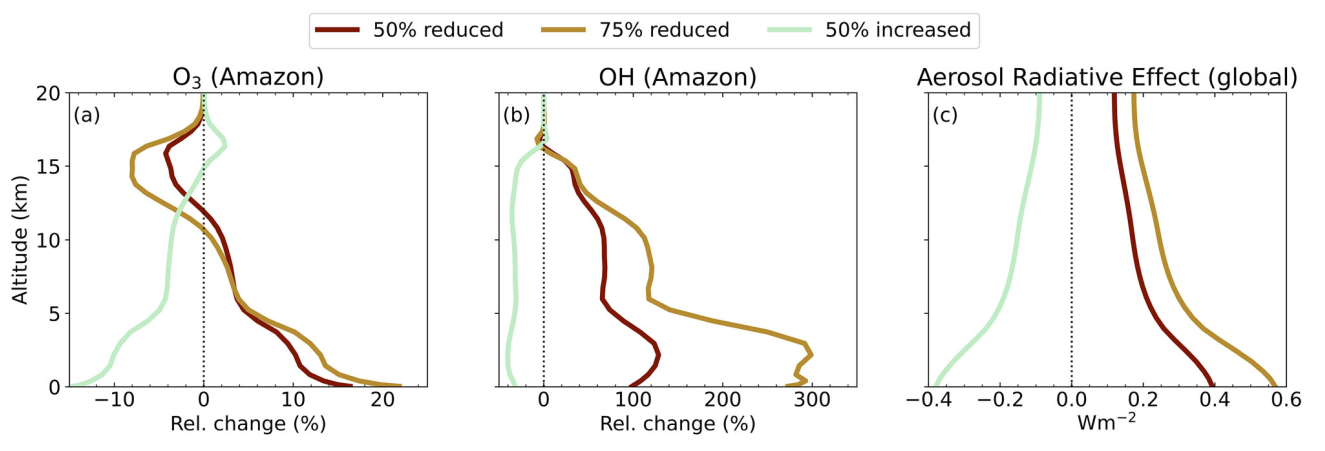
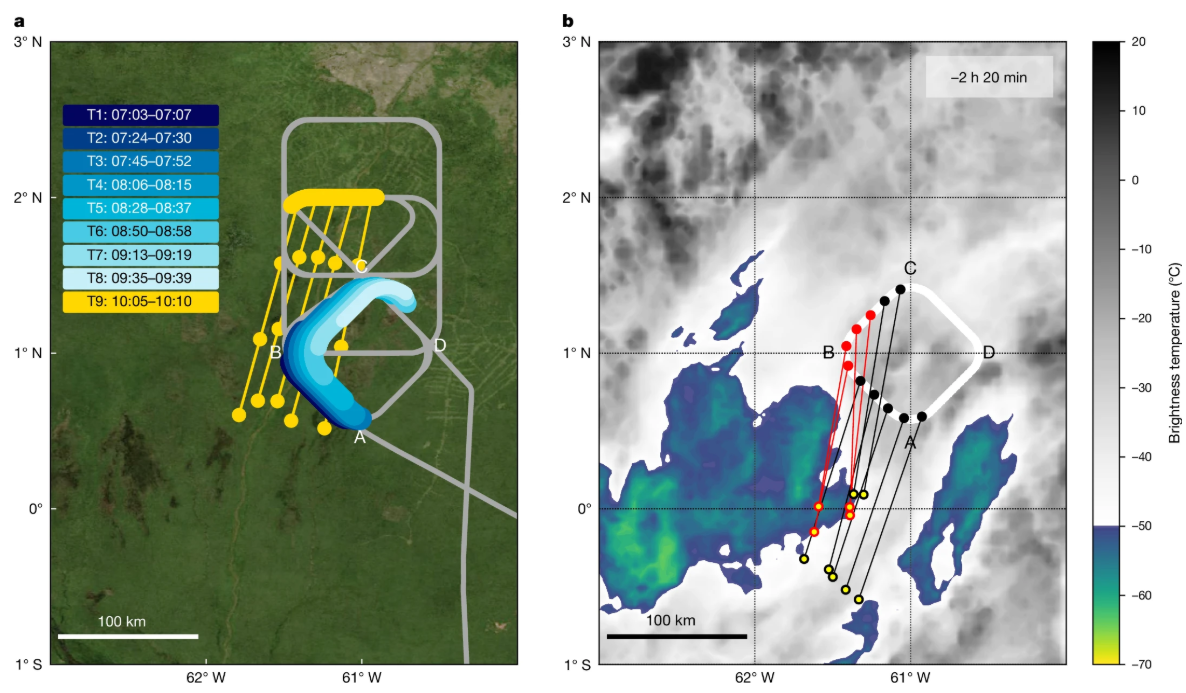
Impacts of convection, chemistry, and forest clearing on biogenic volatile organic compounds over the Amazon
Nidhi Tripathi, Bianca E. Krumm, Achim Edtbauer, Akima Ringsdorf, Nijing Wang, Matthias Kohl, Ryan Vella, Luiz A. T. Machado, Andrea Pozzer, Jos Lelieveld, Jonathan Williams
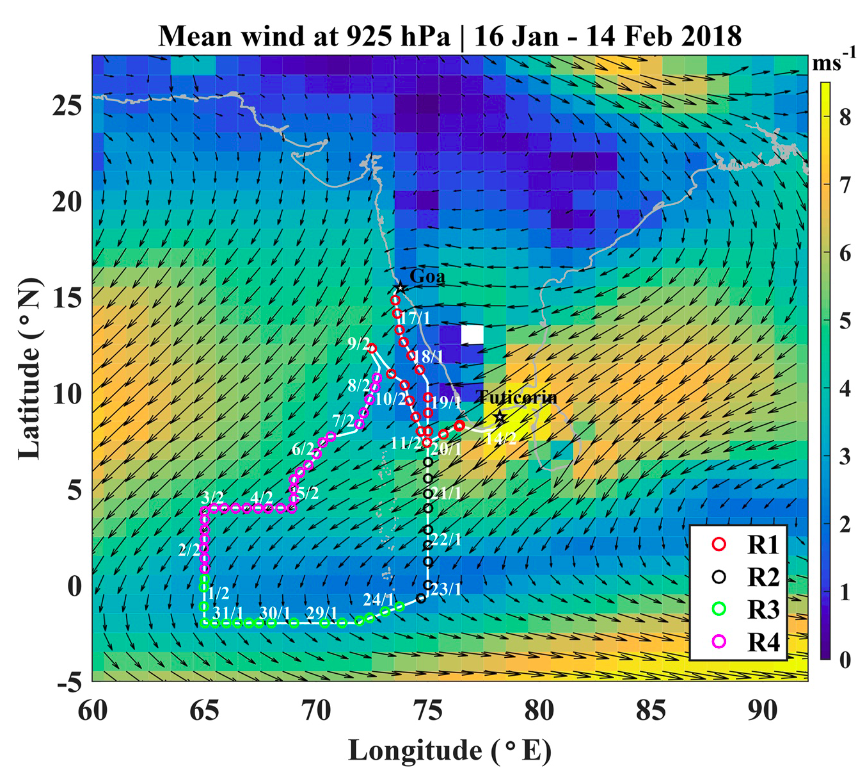
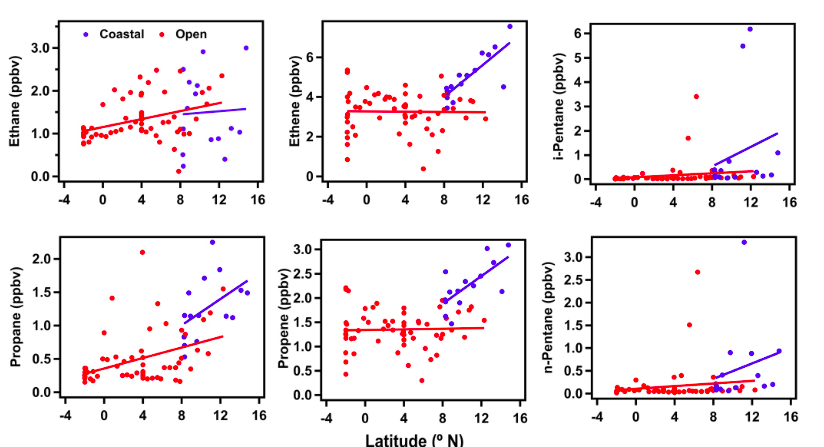
Sources and Distribution of Light NMHCs in the Marine Boundary Layer of the Northern Indian Ocean During Winter: Implications to Aerosol Formation
Nidhi Tripathi, Imran A. Girach, Sobhan Kumar Kompalli, Vishnu Murari, Prabha R. Nair, S. Suresh Babu, Lokesh Kumar Sahu
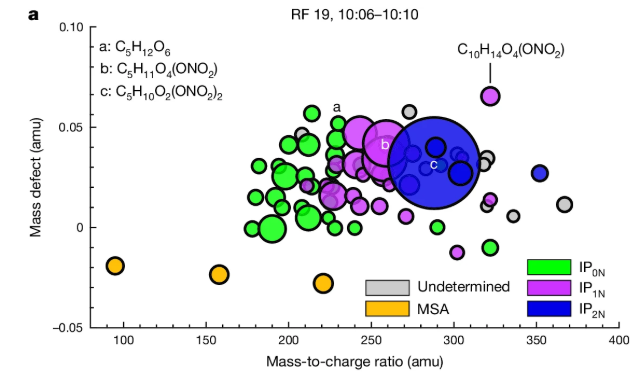
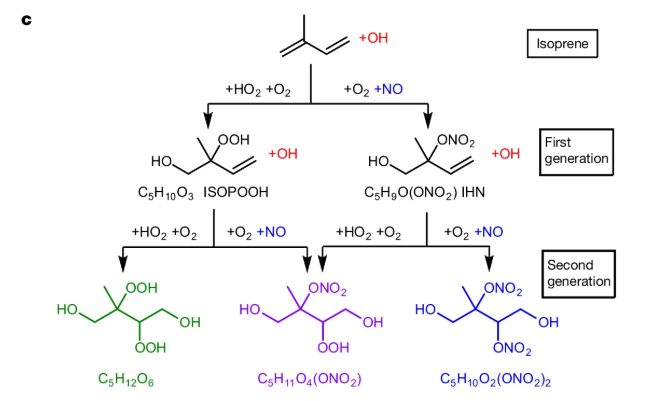
Isoprene nitrates drive new particle formation in Amazon's upper troposphere
Joachim Curtius, Martin Heinritzi, Lisa J. Beck, Mira L. Pöhlker, Nidhi Tripathi, Bianca E. Krumm, Philip Holzbeck, Clara M. Nussbaumer, Lianet Hernández Pardo, Thomas Klimach, Konstantinos Barmpounis, Simone T. Andersen, Roman Bardakov, Birger Bohn, Micael A. Cecchini, Jean-Pierre Chaboureau, Thibaut Dauhut, Dirk Dienhart, Raphael Dörich, Achim Edtbauer, Andreas Giez, Antonia Hartmann, Bruna A. Holanda, Philipp Joppe, Katharina Kaiser, Timo Keber, Hannah Klebach, Ovid O. Krüger, Andreas Kürten, Christian Mallaun, Daniel Marno, Monica Martinez, Carolina Monteiro, Carolina Nelson, Linda Ort, Subha S. Raj, Sarah Richter, Akima Ringsdorf, Fabio Rocha, Mario Simon, Sreedev Sreekumar, Anywhere Tsokankunku, Gabriela R. Unfer, Isabella D. Valenti, Nijing Wang, Andreas Zahn, Marcel Zauner-Wieczorek, Rachel I. Albrecht, Meinrat O. Andreae, Paulo Artaxo, John N. Crowley, Horst Fischer, Hartwig Harder, Dirceu L. Herdies, Luiz A. T. Machado, Christopher Pöhlker, Ulrich Pöschl, Anna Possner, Andrea Pozzer, Johannes Schneider, Jonathan Williams, Jos Lelieveld
Aerosol Characteristics and Particle Production in the Upper Troposphere Over the Amazon Basin
Nidhi Tripathi, L. K. Sahu , Liwei Wang, Pawan Vats, Meghna Soni,Purushottam Kumar, R. V. Satish, Deepika Bhattu, Ravi Sahu, Kashyap Patel,Pragati Rai, Varun Kumar, Neeraj Rastogi, Narendra Ojha, Shashi Tiwari, Dilip Ganguly, Jay Slowik, André S. H. Prévôt, and Sachchida N. Tripathi
Integrated Impact & Methodological Highlights
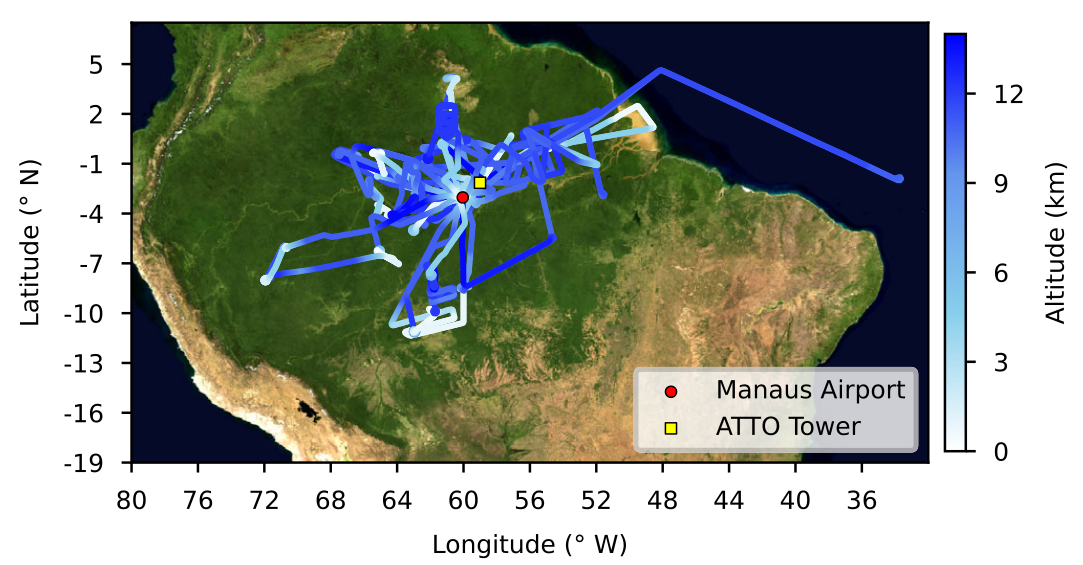
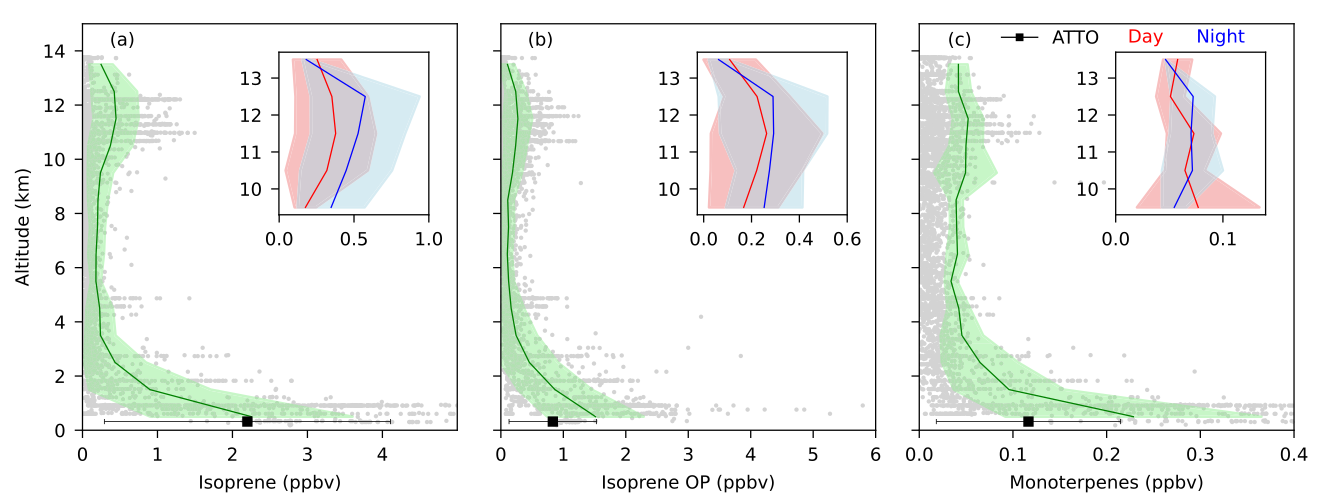
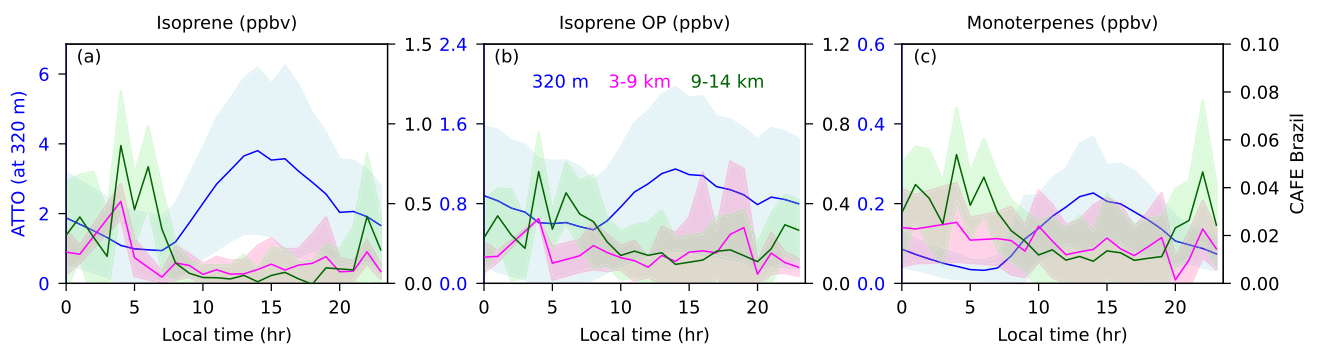
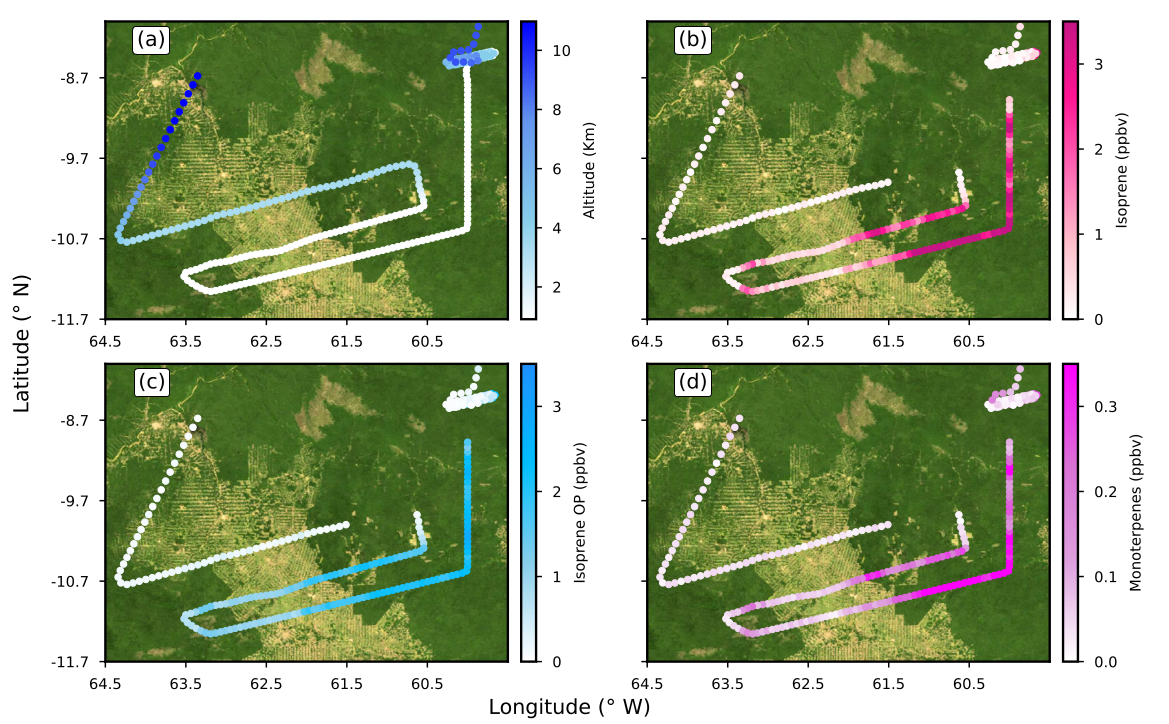
- Amazon study: combined aircraft measurements (CAFE Brazil and CAFE Pasific) + high-resolution chemical transport modeling (EMAC)
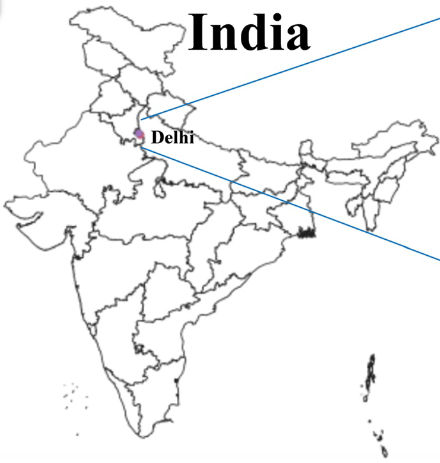
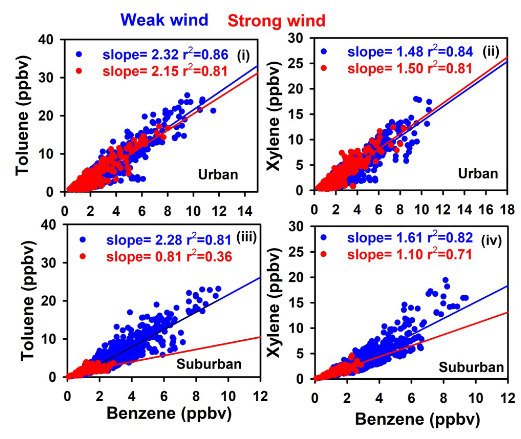
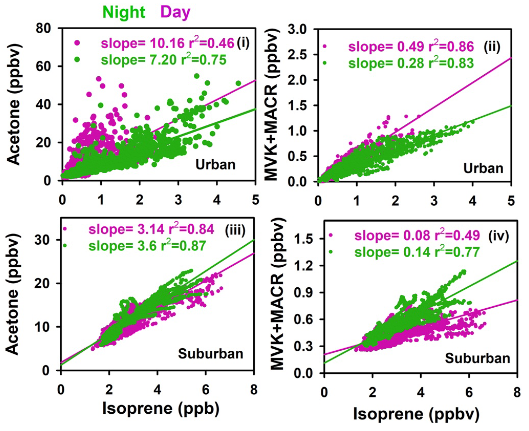
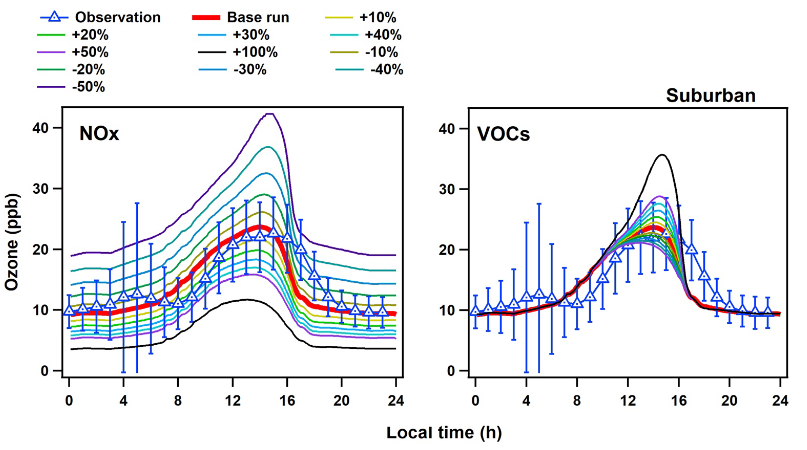
- Indian Ocean: PTR-TOF-MS was used to measure VOCs over various indian terrain including the Himalyan forest, western Indian ghats and dry western india in Gujarat and Rajasthan. Also back-trajectory analysis and OH reactivity estimation were done in papers.
- In first two papers highlight the role of VOC chemistry in regional climate & air quality feedbacks.
- Policy relevance: improving atmospheric models over tropical and marine environments.
"Our work emphasizes the need to include small-scale convective transport and deforestation edges in biogenic emission models to capture VOC budgets accurately."
"Light NMHCs in the Northern Indian Ocean are strongly influenced by continental pollution, increasing aerosol burden over remote marine regions."